When most people hear “Ovid,” they picture high school Latin students, dusty textbooks, and professors who haven’t smiled since the last century. But tucked inside Metamorphoses are some of the most vivid, dramatic, and downright fun stories you can offer younger learners.
They work beautifully for ages 8–12; no Latin required, no classical training needed, just good storytelling.
Why Kids Love Ovid (Even If They Don’t Know His Name Yet)
Children adore stories with:
- clear characters
- strong emotions
- dramatic consequences
- magical transformations
- moral lessons
Ovid delivers all of this in short, punchy episodes that feel exciting and grown up, yet still totally accessible.
Why Ovid Fits Grades 3–5 So Well
His myths naturally support core literacy skills:
- sequencing (clear beginning, middle, end)
- inference (characters making big emotional choices)
- theme (pride, responsibility, creativity, greed)
- cause and effect (actions lead to consequences)
- vocabulary in context (rich but manageable)
- compare and contrast (myths pair really well)
- visualisation (transformations are inherently visual)
Short enough for one lesson, rich enough for a whole week of activities.
Myths That Work Brilliantly for Younger Learners
I’ve adapted several myths for Grades 3–5 (Y4–6; P5–7), with more coming:
- Daedalus and Icarus (choices, consequences, freedom)
- Phaethon (responsibility, pride, listening to advice)
- Narcissus (self awareness, empathy)
- Arachne (creativity, confidence, humility)
- Midas (greed, gratitude, learning from mistakes)
They’re dramatic, emotional, and perfect for reluctant readers who want stories that feel grown up without being overwhelming.
Easy, High Impact Activities for Any Myth
Try these with any Ovid story:
- sequencing strips
- comic strip retellings
- character feelings charts
- “What would you do?” moral reasoning
- vocabulary sketch notes
- mini debates (“Was Arachne right to challenge Athena?”)
- rewrite the ending creative writing
- compare and contrast two myths or characters
And if you’re teaching history rather than literacy, Ovid still fits beautifully:
- Roman culture
- storytelling traditions
- moral education
- geography
- timeline connections
- links to Livy and foundation myths
Explore Ovid Today; Inspire a Child Tomorrow
Ovid isn’t just for older students. His stories are perfect for any child who loves magic, drama, flawed characters, big mistakes, and lessons that stick.
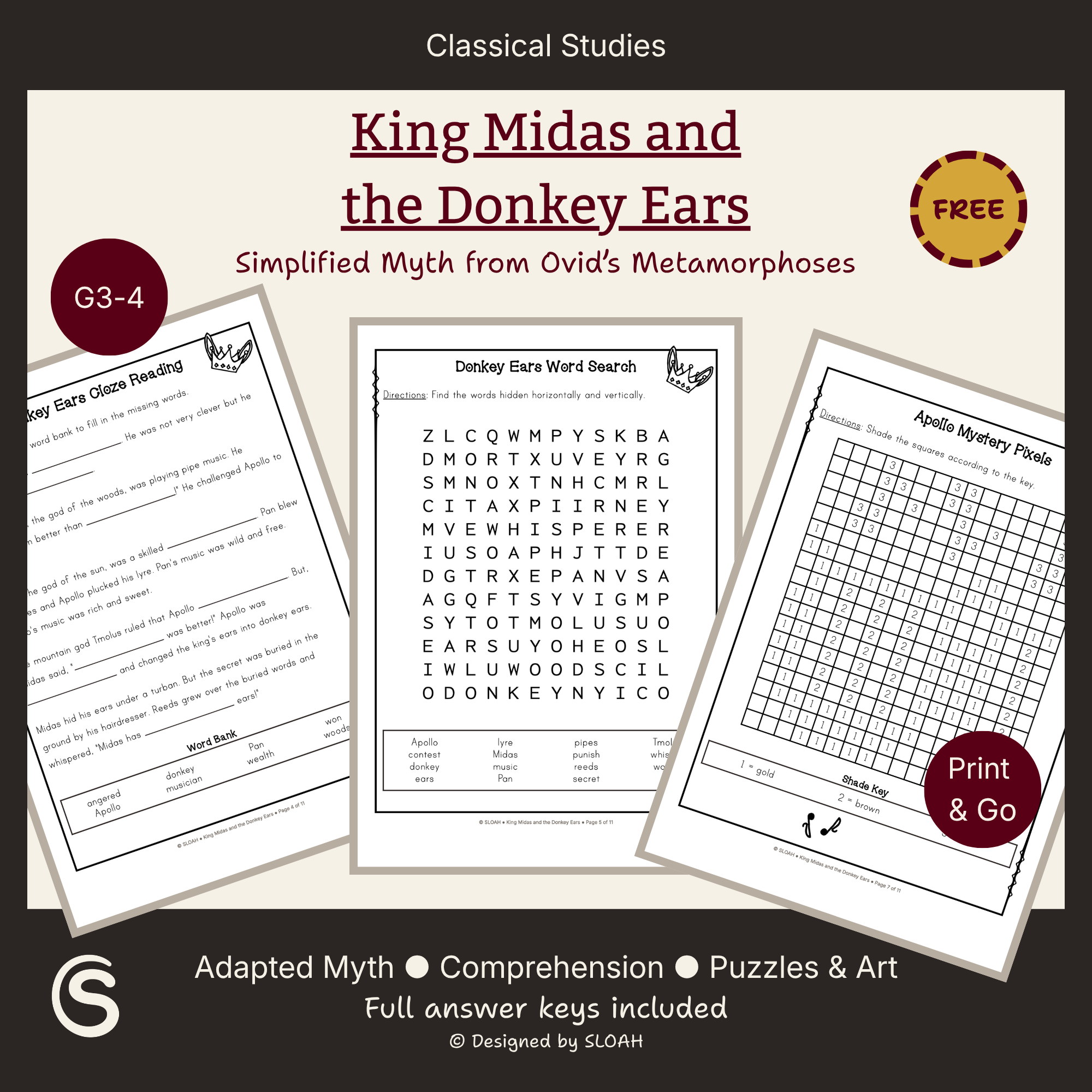
If you’d like to try Ovid in your classroom or homeschool, start with my free myth resource: King Midas and the Donkey Ears.
And if you’re ready to explore more, my full collection of adapted myths is available in my Classical Studies collection: Explore my adapted Ovid myths.
Comments